

- By admin
- 06 Dec, 2025
- Digital Marketing
What Is Digital Marketing?
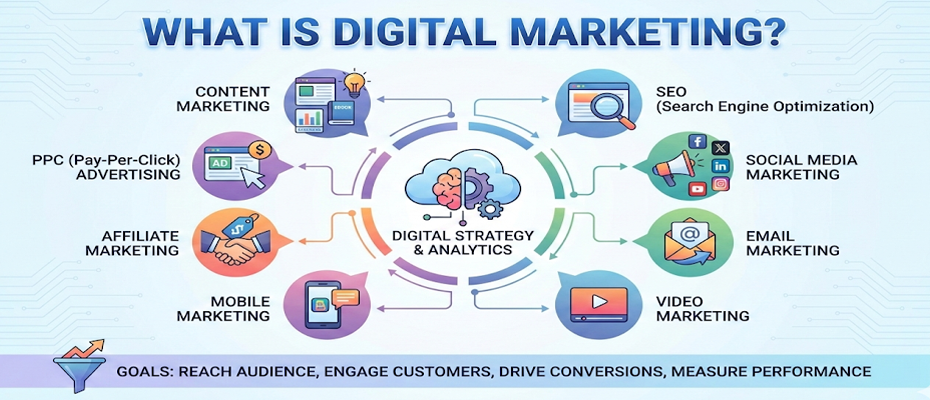
Digital marketing is the practice of promoting products and services using online platforms such as search engines, social media, email, and websites. It helps businesses reach the right audience, measure performance, and grow faster in the digital world.
Digital marketing refers to the promotion of products and services through online channels such as search engines, social media platforms, websites, email, mobile apps, and digital advertising networks. It is one of the most powerful ways for businesses to reach their target audience, build brand awareness, and drive sales in today’s internet-driven world.
Unlike traditional marketing (newspapers, TV, radio, billboards), digital marketing focuses on real-time engagement, measurable results, and highly targeted advertising. Whether you’re a small startup or a large enterprise, digital marketing helps you connect with customers where they spend most of their time—online.
Why Digital Marketing Matters Today
The world has rapidly shifted toward digital platforms. Before making a purchase, people usually search online, read reviews, visit websites, and compare products. Digital marketing allows businesses to:
-
Reach the right audience at the right time
-
Track user behavior and measure performance
-
Optimize campaigns for better results
-
Build long-term customer relationships
-
Increase brand visibility globally
-
Reduce marketing costs compared to traditional methods
Key Components of Digital Marketing
Here are the major pillars that make up a complete digital marketing strategy:
1. Search Engine Optimization (SEO)
SEO helps your website rank higher on search engines like Google. When users search for terms related to your business, SEO ensures your content appears at the top of search results.
Benefits:
-
Organic traffic
-
Improved brand authority
-
Long-term results
2. Social Media Marketing (SMM)
This involves promoting your brand on platforms like Facebook, Instagram, LinkedIn, Twitter, and YouTube.
Goals:
-
Build brand awareness
-
Engage with audiences
-
Generate leads and sales
3. Search Engine Marketing (SEM)
SEM includes paid ads on search engines—for example, Google Ads—to instantly appear at the top of search results.
Useful For:
-
Quick traffic
-
Targeting specific keywords
-
Immediate visibility
4. Content Marketing
Content marketing focuses on creating valuable content—blogs, articles, videos, infographics, guides—to attract and educate your audience.
Why it works:
-
Builds trust
-
Improves SEO
-
Increases conversions
5. Email Marketing
Email remains one of the most effective digital marketing strategies for nurturing leads and retaining customers.
Common Uses:
-
Sending newsletters
-
Promoting offers
-
Providing updates and reminders
6. Affiliate Marketing
Businesses partner with publishers or influencers to promote their products, paying a commission for every sale generated.
Best for:
-
Expanding reach
-
Low-risk performance-based marketing
7. Influencer Marketing
Leveraging influencers with a strong online following helps brands reach new audiences.
Advantages:
-
High trust and credibility
-
Better engagement rates
8. Mobile Marketing
This uses SMS, push notifications, mobile apps, and mobile ads to reach customers on their smartphones.
Why it matters:
-
Most people now browse through mobile
-
Real-time communication
How Digital Marketing Works
Digital marketing works by using different online channels to attract visitors, convert them into leads, and finally turn those leads into customers. A general workflow looks like this:
-
Create Awareness using social media, SEO, or ads
-
Engage Users through valuable content
-
Capture Leads using forms, landing pages, or offers
-
Nurture Leads through email campaigns and retargeting
-
Convert Leads into paying customers
-
Retain Customers through follow-up campaigns and loyalty programs
Benefits of Digital Marketing
✔ Cost-effective
Digital marketing allows even small businesses to compete with large brands.
✔ Highly Measurable
Tools like Google Analytics help track campaign performance in real time.
✔ Global Reach
Reach customers beyond geographical boundaries.
✔ Better Targeting
Target users based on age, gender, interests, location, device, and behavior.
✔ Personalized Marketing
Send personalized messages and offers to users based on their actions.
Real-World Example of Digital Marketing Campaign (Simplified)
Here is a basic example of how a business might run a digital marketing campaign:
This kind of snippet helps businesses track ad conversions to measure ROI.
Future of Digital Marketing
Digital marketing continues to evolve with new technologies like:
-
Artificial Intelligence (AI)
-
Marketing Automation
-
Voice Search Optimization
-
Chatbots
-
Augmented Reality (AR) campaigns
-
Personalization Algorithms
Businesses that adapt early gain a competitive edge.
Conclusion
Digital marketing is more than just promoting products—it's about building relationships, understanding your audience, and creating meaningful experiences online. With the right strategies and tools, any business can scale quickly and reach a global audience.